



Why September Is the Best Time to Plan for Memory Care & Assisted Living
Why September Is the Best Time to Plan for Memory Care & Assisted Living
Autumn Brings Focus, and a Quiet Wake-Up Call
As summer fades and families return to routine, September brings more than cooler weather and back-to-school nights. For many adult children, it also brings a moment of clarity: It’s time to focus on Mom or Dad.
September is the start of World Alzheimer’s Month, culminating in World Alzheimer’s Day on September 21st. For families across New Jersey and beyond, it’s a meaningful reminder to finally address the memory changes or care concerns that have been quietly building.
Why Fall Is the Ideal Season to Start the Conversation
After the summer rush, fall offers something rare: space to think. Many families find September to be the perfect moment to:
- Reassess your aging loved one’s health and living situation
- Tour memory care and assisted living communities while foot traffic is lighter
- Address early signs of memory loss before the holidays add stress
- Begin Advance Care Planning in a calm, non-crisis environment
“We knew something was changing with my father’s memory, but with two kids at home, we were overwhelmed,” said Daniel T., a Veramazo client from Central Jersey. “September gave us a moment to breathe, and Veramazo gave us the clarity and guidance to act. Their team was incredibly professional, kind, and resourceful.”
September Gave Us Space to Act
Caregiving pressures are rising. Today, more Americans care for aging parents than for young children, over 23 million, in fact. The juggling act between careers, parenting, and caregiving is increasingly unsustainable.
4 Signs It’s Time to Take Memory Changes Seriously
It’s easy to dismiss forgetfulness as “just getting older.” But subtle memory shifts can be early signs of something deeper. Pay attention to these red flags:
Forgetting familiar names, places, or routines
Repeating stories or questions within minutes
Trouble managing bills, medications, or appointments
Withdrawing from social situations or becoming unusually irritable
Early identification allows families to make proactive decisions, well before a crisis forces action.
Smart Tools and Real Support
Today’s caregiving landscape includes more support than ever. From medication reminder apps to GPS-enabled watches and memory games, families now have tech on their side.
Veramazo helps families choose tools that fit, navigate complex care systems, and identify communities offering cutting-edge cognitive programs.

Clinical Advocacy You Can Count On
Whether your loved one is living at home, in assisted living, or needs more advanced care, Veramazo’s Clinical Advocacy Program ensures that no one navigates this alone.
- In-person assessments and regular wellness visits
- Expert coordination with physicians and senior living teams
- Ongoing monitoring of psychosocial and cognitive changes
- Calm, objective support for family decisions and transitions
We don’t just recommend, we walk beside you. Because your peace of mind matters as much as theirs.
This Season, Let Clarity Be the Gift
We know this decision doesn’t come lightly. But if you’ve been waiting for the “right time” to explore memory care or assisted living options, September is that time. You don’t have to have all the answers. You just need a trusted guide.
Schedule a complimentary consultation with our Clinical Advocacy team today. Whether you’re beginning the journey or ready to tour communities, we’re here to help you make confident, compassionate decisions.
Because memory matters. And your loved one deserves more than care, they deserve advocacy.


Who’s Really Watching Over Mom? The Senior Care Staffing Crisis and Why Clinical Advocacy Has Become Essential
Who’s Really Watching Over Mom? The Senior Care Staffing Crisis and Why Clinical Advocacy Has Become Essential
The Silent Emergency in Senior Care
Across New Jersey and the nation, senior living communities and long-term care facilities are facing a growing crisis: not enough hands to provide the care our aging population needs. From independent and assisted living to memory care and nursing homes, high turnover and chronic staff shortages have become the norm rather than the exception.
The numbers tell the story:
- Fewer than 1 in 5 nursing homes in New Jersey would currently meet proposed federal staffing minimums.
- 63% of assisted living providers nationwide report staffing shortages, with one in four calling the situation “severe.”
- In a recent New Jersey state survey, 84% of Certified Nursing Assistants (CNAs) said they would only return to work under improved conditions, citing staffing shortages as the top challenge.
- While the state’s 65+ population is expected to grow by 14% by 2028, the working-age population will decline by 1.3%, intensifying the gap.
These challenges touch every corner of the state. In North Jersey, population density places enormous pressure on facilities. In Central and South Jersey, elder populations are expanding while the workforce shrinks.
Families often don’t feel the impact until something goes wrong: missed medications, delayed care, isolation, or preventable hospital visits. It raises a difficult but urgent question, who is truly watching over your loved one?
The Hidden Burden on Families
Most families are promised that their loved one will receive attentive care. And in many cases, staff members do their best. But when care teams are stretched thin, subtle yet important changes can go unnoticed. Medical concerns may slip by. Emotional needs can be overlooked. Communication with families becomes inconsistent.
What starts as occasional check-ins can quickly escalate into daily calls, care coordination, and advocacy, leaving family members feeling like they’ve become the primary care manager, even when their loved one lives in a community designed to provide that very service.
You shouldn’t have to choose between your own well-being and your parent’s safety.
Why Clinical Advocacy Is the Missing Link
Veramazo offers a different approach, one where families aren’t left to carry the burden alone. Our Clinical Advocacy Program ensures older adults receive consistent, expert oversight no matter where they live.
Our licensed clinical social workers, nurses, and elder care professionals act as an extension of your family. We go beyond basic case management to:
- Make regular in-person visits, whether in assisted living, memory care, nursing homes, or at home
- Coordinate directly with medical providers and facility staff
- Monitor for physical, cognitive, and emotional changes
- Serve as objective advocates who understand healthcare systems inside and out
- Keep families informed with clear, compassionate updates
In an environment where staff turnover is high, our team provides the steady presence every family hopes for.

Real-Life Peace of Mind: A Client Story
When we began supporting Mr. B, a retired teacher in a memory care community, his daughter, who lived two states away, was overwhelmed. She was receiving late-night calls about falls, confusion, and unexplained behaviors.
Within a month, our Clinical Advocate identified an untreated infection and pushed for a neurology consult that changed the trajectory of his care. With our oversight and consistent visits, his health stabilized, the crisis calls stopped, and his daughter could finally rest, knowing her father had someone looking out for him.
It’s Not Just About the Care Plan, It’s About Having a Voice
Our clients know they have someone at the table who understands their loved one’s needs, speaks the language of healthcare, and ensures care doesn’t get lost in the shuffle.
That’s the difference a clinical advocate makes.
Signs Your Family Could Benefit from Clinical Advocacy
- You worry your loved one isn’t getting the attention they need
- You feel excluded from care decisions or unsure of what’s really happening day to day
- You live far away and can’t visit regularly
- You’re exhausted from trying to coordinate care yourself
We’re Here to Help
Whether your loved one is aging at home or in a long-term care setting, Veramazo’s Clinical Advocacy Program ensures no detail is overlooked. We walk beside you every step of the way, so your family can make decisions with clarity and confidence.
Schedule a free consultation today and discover how we can help protect the health, safety, and dignity of your loved one.
Because they deserve to be seen, heard, and cared for, always.

What Is Clinical Advocacy in Elder Care? A Real Example from Veramazo
What Is Clinical Advocacy in Elder Care?
A Real Example from Veramazo
A behind-the-scenes look at how Veramazo supports families during high-stress transitions, from rehab to assisted living, with compassion, clarity, and clinical precision.
When a discharge plan feels rushed or risky, who is watching out for your loved one?
Navigating post-surgery rehab and planning a safe discharge into assisted living is one of the most emotionally complex and overlooked stages of elder care. That is precisely why Veramazo’s clinical advocacy services exist: to help families manage elder care transitions safely, calmly, and with expert support.
One of our recent clients, recovering from surgery, had been making modest physical progress but remained deeply unsteady. She still needed two-person assistance just to stand. Despite this, her rehab facility scheduled her to be discharged back to her assisted living community on a Sunday. There would be no Director of Nursing on site. Her personal caregiver could not arrive in time. And she herself was expressing fear and hesitation during therapy sessions.
Her son, who was acting as the primary decision-maker, received an update that left him overwhelmed and uncertain. The timing felt abrupt. The risks felt serious. But thankfully, he had Veramazo in his corner.
What Veramazo Did Next
At Veramazo, we don’t believe families should be left to navigate medical transitions alone. When our clinical advisor, Michelle, was informed of the proposed discharge, she stepped in to attend the care plan meeting, which included the rehab facility’s nurse manager, physical therapist, and social worker.
Michelle carefully reviewed the patient’s clinical status, physical therapy notes, and medication records. She spotted several red flags. Then, she took action and sent a clear, compassionate update to the client’s son, outlining everything we had done and would continue to do to ensure his mother’s safety and dignity.
Here is a summary of what that email included:
Her medication list had recently changed. Michelle confirmed that the updated prescriptions and dosage information would be communicated directly to the assisted living community.
The patient continued to require a two-person assist and was fearful of standing or walking during therapy. Her physical progress remained limited.
The proposed discharge was scheduled for a weekend. Michelle strongly advocated against this and filed a Medicare appeal to delay the process.
She spoke directly with the Medicare case manager, documented the appeal number, and ensured the rehab team had the information.
She coordinated with the assisted living nurse to schedule an in-person evaluation, confirming that the return was clinically appropriate before moving forward.
Michelle also handled transportation logistics, including payment options for the medical ambulette, so the family did not need to manage those details on their own.
Most importantly, she committed to being present in person on the day of discharge to ensure all documentation was transferred correctly and to brief the care team on the patient’s medication needs and physical support requirements.
This email was not just a helpful update, it was a full-circle demonstration of what clinical advocacy truly looks like.
What Clinical Advocacy in Elder Care Means at Veramazo
Our work doesn’t end once someone transitions into assisted living. In many cases, that is just the beginning. We stay with families through every critical moment, especially the ones they never saw coming.
From navigating rehab discharge plans to advocating directly with Medicare, our team coordinates across doctors, physical therapists, social workers, and facility staff. We don’t just answer questions. We ask the right ones. We push back when timelines are unsafe. And we make sure no detail slips through the cracks during transitions of care.
When families are tired, uncertain, or emotionally overwhelmed, we step in as a calm, qualified guide.

Why Families Trust Us With Their Loved Ones
This family didn’t need to chase down the care team, guess whether paperwork was being handled, or worry about medication accuracy. They didn’t need to coordinate transportation or figure out whether their loved one would be safe alone on a Sunday afternoon.
We handled it. All of it. Because that’s what clinical advocacy should mean.
If you’re facing a decision, you don’t have to do it alone.
Veramazo offers licensed, experienced support to help families make informed, medically sound choices during elder care transitions. Whether you’re managing a recent surgery, a rehab discharge, or planning the move back into assisted living, our team can step in with clinical advocacy that keeps your loved one safe and gives you peace of mind.
Quick Summary:
-
Clinical advocacy ensures safe transitions after rehab, surgery, or hospitalization.
-
Veramazo coordinates directly with Medicare, rehab facilities, and assisted living teams.
-
Our advocates handle appeals, medication transfers, transportation, and discharge logistics.
-
Families are never left to manage complex care plans alone; we walk beside you at every step.

Want help navigating care transitions?
Let us help you protect your loved one’s safety and dignity, with clinical expertise and hands-on support you can trust.

We Hate the Word “Placement" – Why Veramazo Offers So Much More
We Hate the Word “Placement” – Why Veramazo Offers So Much More
Choosing care for an aging loved one isn’t simply about where they’ll live. It’s about how they’ll be supported—every step of the way.
At Veramazo, we have a strong reaction to the word placement.
It sounds clinical, transactional, and incomplete.
To us, “placement” implies that our work begins and ends with finding a room in a facility. That once the move-in is complete, the relationship is over.
That’s not what we do.
Veramazo was founded to offer something more thoughtful, more involved, and more human. We aren’t here to shuffle people between options and hand over a brochure. We’re here to guide families through one of life’s most emotional transitions—with care, clarity, and expertise.
Why “Placement” Misses the Point
The word strips away the most important part of this journey: the people.
Families navigating elder care aren’t looking for a transaction. They’re looking for guidance. They need to understand complex medical information. They need to feel confident that their loved one’s needs are being met—not just today, but in the weeks and months to come.
Most importantly, they need a partner who sees their loved one not as a case, but as a whole person with a history, preferences, and dignity that must be protected.

What We Actually Do
We describe Veramazo as an elder care concierge and clinical advocacy service. But in truth, we’re simply the people who walk alongside families and help them make the right decisions.
That includes attending medical appointments, asking hard questions, coordinating with specialists, reviewing care plans, and looping in trusted professionals—whether legal, financial, or therapeutic—who can help ease the burden.
We don’t disappear once a room is chosen. In fact, that’s usually where our work begins.
Beyond Referrals: A Relationship That Lasts
There are many companies that offer referrals or “placements.” Veramazo is different.
We take the time to understand each family’s goals, values, and concerns. We don’t rush decisions. We don’t work from a limited list of facilities. And we never treat your loved one like a checkbox on a to-do list.
Instead, we stay involved. We remain available. And we continue to advocate, even after the move has been made.
Because that’s what we’d want for our own families—and that’s the level of care you deserve.
A Higher Standard of Elder Care
Senior care is evolving. Families are asking smarter questions and expecting more personalized, transparent, and compassionate support.
At Veramazo, we’re proud to be part of that shift.
We reject the idea that “placement” is the goal. We believe the real goal is peace of mind—for both the aging adult and the people who love them. That means clear communication. Thoughtful decisions. And a trusted partner to help you every step of the way.

Let’s Talk About What Comes Next
If you’re feeling overwhelmed by the process, you’re not alone.
Reach out today to start a conversation. We’ll help you explore your options, understand the realities of elder care, and feel confident about the path ahead.
It’s not just about finding a place. It’s about finding the right plan, the right people, and the right support. And that’s exactly what we’re here to offer.

A Veteran‑Focused Guide to Elder‑Care Benefits, Resources & Advocacy
A Veteran‑Focused Guide to Elder‑Care Benefits, Resources & Advocacy
Co‑authored by Beth Oconnor, Veramazo Elder Care Advisor and Veteran Benefits Specialist
Every May, Memorial Day spotlights the sacrifice and strength of America’s veterans, but questions about healthcare, benefits, and aging well surface all year long. To answer them, Veramazo asked Beth Oconnor, a clinical advisor and veteran‑benefits expert on our team, to share her frontline perspective.
Why Aging Veterans Face a Different Set of Hurdles
Even the toughest soldiers carry invisible rucksacks into retirement: service‑connected injuries, PTSD, Agent Orange–related illnesses, and a lifetime of wear on joints and hearing. Add complex VA processes, and the path to good care can feel like a bureaucratic obstacle course.
Beth’s Insight:
“Most veterans handle adversity well, but red tape can sap that optimism. When I step in as an advocate, I watch stress melt away because they know someone’s finally translating VA‑speak into plain English.”
Takeaway: Recognizing these unique hurdles early—before a crisis hits—gives families more time to plan care and claim benefits.
Little‑Known Benefits That Can Change Everything
Many veterans and spouses leave thousands of dollars on the table simply because they’ve never heard of specific programs:
- Aid & Attendance / Housebound Allowance – Monthly tax‑free income for in‑home aides or community living.
- HISA Grants – Up to $6,800 for ramps, roll‑in showers, or widened doors.
- Veteran‑Only Elder Communities – Residences offering military camaraderie plus specialized clinical support.
- New Jersey‑Specific Perks – Property‑tax relief, transportation, veteran‑priority nursing beds.
Beth’s Insight:
“I’ve seen a $2,300 Aid & Attendance stipend keep a couple together in their own home for three extra years. Knowing every benefit isn’t a luxury—it’s life‑changing.”
Bottom line: A benefit review should be the first step in any elder‑care plan.
Four Steps to Navigate the VA—Without Losing Momentum
- Gather Core Documents Early – DD‑214, discharge papers, up‑to‑date medical reports.
- Work With an Accredited Advocate – Professionals like Veramazo know which forms trigger extra scrutiny.
- Track Every Submission – Certified mail receipts and call logs protect you if files go missing.
- Align Benefits to Real‑World Care Goals – Confirm any home‑care agency or community accepts VA funds before you sign.
Beth’s Insight:
“The biggest pitfall is trying to file alone. One unchecked box can stall a claim for six months. An advocate’s fee is often less than one month of missed benefits.”
Quick recap: A methodical, documented approach saves months—sometimes years—of waiting.
Success Snapshot: Turning Reluctance Into Renewal
A 97‑year‑old World War II veteran refused outside help—until daily tasks became impossible. Veramazo secured Aid & Attendance funds, a HISA grant for a new ramp, and agency caregivers, all VA‑funded within four months. At 101, he joins neighbors on daily walks, and his spouse’s survivor benefits are already approved.
Beth’s Insight:
“Pride is powerful. Framing benefits as ‘earned entitlements’—not handouts—often opens the door.”
How Veramazo Stands With Veteran Families
- Clinical Advocacy Services – We attend key medical visits to document service‑related conditions.
- Guided Senior Transitions (No Cost to Families) – Our advisors match veterans with communities that honor military culture.
- Benefit Navigation – We prepare, file, and monitor claims so families can focus on living—not paperwork.
- Home Health Aid Subsidizing: The Veramazo team can also provide valuable resources to help subsidize home health aid hourly costs through the VA.
Beth’s Insight:
“When a family hears, ‘With Veramazo, you’ll never feel alone,’ they can breathe easier. That’s why I do this work.”
Memorial Day may spark the conversation, but veteran advocacy is a year‑round mission. If you or a loved one served and now faces age‑related challenges, allow our advocates to guide you the rest of the way. Together, we’ll ensure the next chapter of life is lived with dignity, independence, and the benefits every veteran has earned.
At Veramazo, we provide personalized and curated advisory services to ensure your loved ones feel at home in a community that meets their unique needs and treats them with the dignity they deserve.

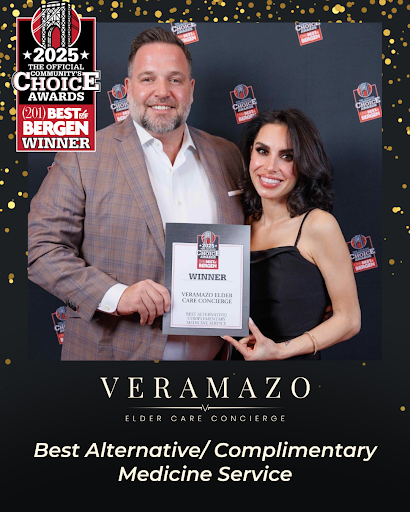
Veramazo Elder Care Concierge Named “Best Alternative / Complementary Medicine Service” in 201 Magazine’s Best of Bergen Community’s Choice Awards
Veramazo Elder Care Concierge Named “Best Alternative / Complementary Medicine Service” in 201 Magazine’s Best of Bergen Community’s Choice Awards
Bergen County, NJ — Veramazo Elder Care Concierge has been voted the 2025 “Best Alternative / Complementary Medicine Service” in 201 Magazine’s Best of Bergen Community’s Choice Awards. The honor, decided entirely by public nominations and more than 300,000 community votes, recognizes the local businesses that deliver extraordinary value, expertise, and heart to the people of Bergen County.
Veramazo’s win places the boutique elder-care advocacy firm alongside more than 140 of the region’s most respected organizations, from restaurants and retailers to healthcare innovators. Company leaders Michael Linn, President, and Michelle Marceca, Executive Vice President, accepted the award at the sold-out gala on March 13.
“Proof We’re Making an Impact”
“Our number-one goal is to make an impact in the community,” said Michael Linn after the ceremony. “Winning this award—beyond being completely humbling and gratifying—is proof that we’ve accomplished just that. We started Veramazo because we saw something being done, but we thought it could be done better. We chose integrity and empathy as our pillars, and this recognition tells us those ideals resonate with families.”
Michelle Marceca added, “Winning this award is deeply personal. It’s a reminder that what we’re building at Veramazo is more than a service—it’s a movement to change the way elder care feels. We’re here to bring light, dignity, and guidance to families during some of their hardest moments. This honor tells me we’re not just dreaming—we’re truly making an impact.”
Why “Alternative / Complementary Medicine”?
The Best of Bergen category highlights organizations that fill crucial gaps in traditional healthcare. Veramazo stood out for providing holistic, real-world support that complements physicians’ medical plans and families’ legal directives. Its two flagship offerings are:
- Guided Senior Transitions (No Cost) – Clinical advisors match seniors with vetted home-care providers or senior-living communities that meet medical, emotional, and financial needs, at zero cost to the family.
- Clinical Advocacy Services (Private Pay) – A concierge team of nurses, social workers, and care navigators delivers ongoing medical advocacy, crisis support, and long-term planning to safeguard every senior’s quality of life.
By translating complex healthcare decisions into compassionate, day-to-day action plans, Veramazo embodies the very spirit of complementary care.
A Community-Driven Honor
The Best of Bergen program begins each October with public nominations. After advancing to the voting round, Veramazo emerged as the clear favorite thanks to widespread community support. “Your votes, trust, and encouragement brought this home,” the team wrote on social media. “This award belongs to every client and family who invited us into their lives.”
What’s Next for the Award-Winning Team?
Veramazo will use the momentum to expand its reach. “Helping more people—that’s our next priority,” Linn shared. “We’re growing our team carefully to ensure every new advisor shares our clinical expertise and our heart.” The company is actively recruiting nurses, social workers, and care coordinators who want to “change the way elder care feels” while enjoying a healthier work-life balance.
About Veramazo Elder Care Concierge
Founded in 2023, Veramazo provides white-glove guided senior transitions at no cost and concierge clinical advocacy for families across northern New Jersey and beyond. From crisis interventions and medical appointment advocacy to dementia guidance and senior living guided transitions, Veramazo ensures seniors live with dignity, safety, and joy while loved ones regain peace of mind.
With Veramazo, you’ll never feel alone while navigating elder care.
At Veramazo, we provide personalized and curated advisory services to ensure your loved ones feel at home in a community that meets their unique needs and treats them with the dignity they deserve.

Celebrating Social Workers: The Unsung Heroes of Eldercare
Celebrating Social Workers:
The Unsung Heroes of Eldercare
Did you know that social workers are often the backbone of healthcare systems, particularly when supporting older adults? In observance of National Social Work Month, we take this opportunity to highlight the crucial role social workers play in eldercare, shedding light on their struggles, triumphs, and the vital advocacy they provide. This post will delve into the importance of social work, the challenges professionals face, and how Veramazo Elder-Care Concierge celebrates and supports these heroes in our mission to uplift seniors and their families. Join us as we explore the intersection of compassion, advocacy, and professional growth that characterizes the vital work of social workers in the eldercare industry.
The Importance of Social Work in Elder Care
Social work in elder care is a specialized field that involves a unique blend of empathy, advocacy, and holistic care. Social workers in this field provide a range of services, from emotional support to resource navigation, ensuring that seniors can thrive in their environments. Their mission often extends beyond just the elderly; they also support families and caregivers, helping them cope with the stresses of caring for aging loved ones.
A Day in the Life of a Social Worker
Understanding their daily tasks is important to truly appreciate what social workers do. Social workers engage in:
-
Assessments and Care Planning: Evaluating the individual needs of seniors and developing personalized care plans, they take into account mental, emotional, and physical health.
-
Advocacy: Acting as a voice for the elderly in medical settings, they advocate for necessary medical treatments and services.
-
Resource Management: Connecting clients with community resources, such as affordable housing, home healthcare, and social services.
These tasks are just the tip of the iceberg. Each day presents new challenges that require a deep commitment to advocacy and change.
The Struggles of Being a Social Worker
Social work is rewarding but can also come with significant challenges, especially in eldercare:
-
Emotional Stress: Social workers often deal with emotional trauma from clients who are facing severe health issues or even end-of-life situations. The emotional weight can be substantial, requiring robust coping mechanisms.
-
Burnout: The nature of social work in eldercare can lead to high rates of burnout. Long hours, heavy caseloads, and the need to continually advocate can leave social workers feeling depleted.
-
Limited Resources: Many social service agencies face funding cuts, directly affecting the quality of care that social workers can provide to their clients.
Despite these challenges, social workers remain dedicated to their mission, often finding strength in their passion for helping the vulnerable populations they serve.
Why Social Workers Are Vital
Social workers are positioned uniquely within eldercare to affect real change. They:
-
Support Emotional Well-Being: Providing counseling and support, they play a critical role in helping seniors navigate the emotional complexities of aging.
-
Educate and Empower Families: Social workers are essential educators for families on topics of aging, caregiving, and elder rights, thus equipping them to advocate effectively for their loved ones.
-
Advocate for System Change: Many social workers are involved not just at the ground level but in advocacy efforts aimed at legislative changes that benefit the elderly.
Veramazo’s Commitment to Social Workers
At Veramazo Elder-Care Concierge, we recognize the tireless work of social workers and are committed to supporting them:
-
Empathetic Environment: We foster a culture of empathy and support for both our staff and our clients. This ethos allows social workers to thrive and avoid burnout.
-
Professional Development: We provide ample opportunities for our social workers to continue their education and professional growth, ensuring they are equipped with the latest skills and knowledge.
-
Holistic Approach: Our philosophy of holistic care encourages not only addressing clients’ physical needs but also their emotional and social determinants of health.
The Role of Community in Supporting Social Workers
Communities play a crucial role in supporting social workers who serve older adults:
-
Recognition and Appreciation: Recognizing their hard work and celebrating achievements can boost morale among social workers.
-
Continued Education and Training Opportunities: Offering workshops and seminars can provide additional support.
-
Resource Allocation: Advocating for funding can ensure that social workers have the tools they need to perform their jobs effectively.
Ways to Support Social Workers
If you’re passionate about supporting social workers and eldercare, here are some ways to show your appreciation:
-
Advocate for Better Wages: Support measures that promote fair compensation for social workers.
-
Volunteer: Get involved with local organizations that help seniors and their families.
-
Raise Awareness: Share stories and information about the importance of social work in elder care.
Where Do We Go From Here?
Social workers are indispensable in the eldercare landscape. As we reflect on their contributions during National Social Work Month, let’s also consider how we can uplift them in their mission. By advocating for resources, recognizing their hard work, and supporting the continued education and holistic care culture at Veramazo, we can help ensure that these heroes continue their vital work.
As you reflect on the importance of advocacy and compassion in social work, consider this: Join us at Veramazo in making a difference. Together, we can uplift our seniors and the dedicated professionals championing their well-being.
At Veramazo, we provide personalized and curated advisory services to ensure your loved ones feel at home in a community that meets their unique needs and treats them with the dignity they deserve.

A note from our co-owner and clinical team leader, Michelle Marceca
Aside from my long-standing career as a Licensed Clinical Social Worker supporting families through life’s transitions, I am also a granddaughter who has dealt with and is currently going through these life events first-hand. I know the journey of caring for aging loved ones can be both heartwarming and challenging. At Veramazo Elder Care Concierge, we often hear from families who grapple with balancing their loved one’s independence with their safety and well-being. This is especially true when exploring aging in place.
Aging in place is more than a practical decision—it’s an emotional one. It’s about allowing your loved one to stay in the home where memories were made, where they feel safe and connected while finding ways to adapt to their evolving needs. For many families, this means walking a fine line between honoring their loved one’s autonomy and addressing the realities of aging.
Through our clinical advocacy and senior living guided transitions, we’ve had the privilege of helping families navigate this path with confidence and clarity. Our approach focuses not just on solutions, but on understanding. We take the time to listen to your concerns and the unique needs of your loved one because no two situations are the same. Whether it involves modifying a cherished home for safety, finding trusted in-home care, or evaluating if aging in place is still the right choice, our team is here to support you every step of the way.
One of the most rewarding aspects of our work is witnessing the peace of mind families gain when they realize they don’t have to tackle these challenges alone. Aging in place can be empowering and enriching—for seniors and their families—but only when supported by thoughtful planning and resources.
We hope this blog post serves as a helpful guide in your journey, offering both practical insights and emotional reassurance. And when you’re ready to take the next step, whether that means assessing your loved one’s current home or exploring other elder care options such as senior living communities, know that Veramazo is here to help.
Together, we can create a plan that ensures your loved one’s safety, comfort, and dignity while easing the weight on your shoulders. Let us be your partner in this journey. Reach out to us today to learn how we can make aging in place—or any senior care decision—a positive and confident choice for your family.

What Is Aging in Place?
What Is Aging in Place?
Empowering Seniors to Stay Independent and Comfortable at Home
When people ask, “What is Aging in Place?” They typically refer to the choice many older adults make to continue living in their own homes rather than moving into an assisted living facility or nursing home. This decision has become increasingly popular as life expectancies increase and seniors remain active longer. It allows older individuals to maintain a familiar environment, stay close to cherished memories, and receive help tailored to their needs—all without losing the comfort of home. In many ways, aging in place can foster a greater sense of self-determination, dignity, and security.
For families, helping a loved one figure out how to age in place involves creating a supportive environment that meets their physical and emotional requirements. With the availability of various home care services, it’s simpler than ever for seniors to get the support they need. These services might include in-home healthcare visits, meal delivery programs, or companionship from a dedicated home caregiver. Ultimately, aging in place centers on preserving independence while ensuring safety, well-being, and peace of mind for everyone involved.
Who Benefits from Aging in Place?
Aging in place appeals to many individuals, but it’s particularly beneficial for those who value their independence and have strong emotional connections to their current residence. Seniors who experience mild to moderate health or mobility issues often find it comforting to navigate a home they already know inside and out—where the layout, furniture placement, and overall environment feel predictable and safe. This sense of familiarity can significantly reduce anxiety and stress, especially for older adults who might otherwise be overwhelmed by a big move or an unfamiliar setting.
Another group that benefits from aging in place is those with robust local support networks. When seniors remain in long-term neighborhoods, they maintain personal relationships with friends, neighbors, and local businesses. These social connections are crucial for emotional health and can help combat the feelings of isolation that sometimes accompany aging. From a practical standpoint, a stable community can also mean accessible transportation, nearby healthcare providers, and nearby grocery stores, making daily life much easier.
-
Ideal for individuals with a deep emotional connection to their home and community.
-
Perfect for those with mild mobility or health limitations who can still function safely with proper support.
-
Social ties remain intact, reducing feelings of loneliness and isolation.
-
Familiar routines and environments help minimize stress and uncertainty.
Creating a Safe and Accessible Home
Safety stands at the forefront for anyone embracing aging in place. Conducting a thorough home evaluation is essential for identifying necessary modifications. Often, making carefully planned changes can drastically reduce fall risks and help seniors easily adjust to their daily routines. For example, placing non-slip mats in areas prone to moisture—such as the bathroom and kitchen—offers enhanced grip underfoot. Installing sturdy grab bars and handrails near showers, bathtubs, and toilets provides additional stability where needed most. Improving lighting in hallways, staircases, and entryways can minimize tripping hazards.
You might also consider more significant adaptations like ramps for wheelchair users or widened doorways to accommodate walkers and other mobility aids. Even simple adjustments—like rearranging furniture to create clear walkways or lowering countertops for easier access—can go a long way toward preserving independence. The goal is to ensure each home corner is accessible and conducive to a senior’s changing needs. Seeking guidance from occupational therapists can be especially valuable; these professionals specialize in identifying customized solutions that allow older adults to thrive safely in their homes.
-
Prioritize safety with non-slip mats, grab bars, and ample lighting.
-
Ramps, handrails, and widened doorways can enhance accessibility for walkers and wheelchairs.
-
Minor adjustments like furniture placement can significantly improve daily mobility.
-
Occupational therapists offer personalized advice for creating a safer home.
Ensuring Comfortable Mobility and Independence
Maintaining mobility and independence is about more than just preventing falls—it’s about enabling older adults to continue enjoying their daily routines and the activities that bring them joy. For instance, consider adjusting bed and couch heights to reduce strain on knees and hips, making it easier to sit down or stand up. A raised toilet seat or a walk-in tub in the bathroom can be a game-changer in preventing accidents and promoting self-reliance.
Don’t forget to assess outdoor spaces as well. Uneven walkways, cracked sidewalks, or poorly lit driveways can pose significant hazards. Leveling these surfaces and installing motion-sensor lighting helps seniors move confidently around their property, whether fetching mail or greeting a friend. Technology, too, plays an ever-growing role in supporting independence. Medical alert systems give older adults quick access to emergency help at the push of a button. Meanwhile, smart home devices—like voice-activated assistants or app-controlled lighting—can streamline daily tasks, reduce the risk of accidents, and provide extra reassurance for seniors and their families.
-
Adjust bed and furniture heights for easier sitting and standing.
-
Ensure outdoor pathways are level, well-lit, and free of tripping hazards.
-
Medical alert systems and smart home devices add layers of safety and convenience.
-
Simple modifications can significantly enhance a senior’s daily independence.
Planning for Long-Term Success at Home
Choosing to age in place isn’t just about immediate fixes—it’s a long-term commitment that evolves alongside a senior’s changing needs. Regularly scheduling home evaluations allows families to catch problems early and make new adjustments as health circumstances shift. Similarly, enlisting professional consultations—from occupational therapists to home care services—can help identify potential challenges before they become emergencies. A home caregiver might visit daily or weekly to assist with tasks like meal prep, light housekeeping, or medication management, making it easier for the senior to stay healthy and well-supported.
On an emotional level, remaining in a cherished home often nurtures mental health. Familiar surroundings can bolster a sense of comfort and stability while allowing seniors to maintain connections with neighbors, friends, and local organizations. This stability, in turn, can boost self-esteem and foster social interaction, both vital for emotional well-being. As a bonus, staying home can help families avoid the stress and disruption often accompanying a significant move. Rather than adapting to a new location, older adults get to enjoy the life and memories they’ve built over decades.
-
Aging in place requires ongoing planning and periodic home evaluations.
-
Professional help—occupational therapists and home caregivers—can adapt to evolving needs.
-
Emotional health is bolstered by staying in a familiar, comforting environment.
-
Strong local connections and supportive relationships enhance long-term success.
Conclusion
Aging in place presents a meaningful way for seniors to remain independent, connected, and safe in the residence they’ve called home for years. Older adults can thrive in familiar surroundings by comprehensively evaluating and modifying the home environment, paying special attention to mobility and comfort, and planning for the long haul with professional advice. Whether it involves simple steps like installing grab bars or adopting new technology for added security, the commitment to how to age in place can help seniors maintain dignity, autonomy, and cherished routines. In the end, understanding “What is Aging in Place?” goes beyond a simple definition—it’s about ensuring that each day unfolds in a space filled with warmth, memory, and the freedom to live on one’s terms.
At Veramazo, we provide personalized and curated advisory services to ensure your loved ones feel at home in a community that meets their unique needs and treats them with the dignity they deserve.
A note from our co-owner and clinical team leader, Michelle Marceca
Aside from my long-standing career as a Licensed Clinical Social Worker supporting families through life’s transitions, I am also a granddaughter who has dealt with and is currently going through these life events first-hand. I know the journey of caring for aging loved ones can be both heartwarming and challenging. At Veramazo Elder Care Concierge, we often hear from families who grapple with balancing their loved one’s independence with their safety and well-being. This is especially true when exploring aging in place.
Aging in place is more than a practical decision—it’s an emotional one. It’s about allowing your loved one to stay in the home where memories were made, where they feel safe and connected while finding ways to adapt to their evolving needs. For many families, this means walking a fine line between honoring their loved one’s autonomy and addressing the realities of aging.
Through our clinical advocacy and senior living guided transitions, we’ve had the privilege of helping families navigate this path with confidence and clarity. Our approach focuses not just on solutions, but on understanding. We take the time to listen to your concerns and the unique needs of your loved one because no two situations are the same. Whether it involves modifying a cherished home for safety, finding trusted in-home care, or evaluating if aging in place is still the right choice, our team is here to support you every step of the way.
One of the most rewarding aspects of our work is witnessing the peace of mind families gain when they realize they don’t have to tackle these challenges alone. Aging in place can be empowering and enriching—for seniors and their families—but only when supported by thoughtful planning and resources.
We hope this blog post serves as a helpful guide in your journey, offering both practical insights and emotional reassurance. And when you’re ready to take the next step, whether that means assessing your loved one’s current home or exploring other elder care options such as senior living communities, know that Veramazo is here to help.
Together, we can create a plan that ensures your loved one’s safety, comfort, and dignity while easing the weight on your shoulders. Let us be your partner in this journey. Reach out to us today to learn how we can make aging in place—or any senior care decision—a positive and confident choice for your family.

Planning for the Holidays
Planning for the Holidays
A Christmas Special
The holiday season is a time of warmth, family, and togetherness, but for elderly loved ones in long-term senior care, it can also bring a mix of emotions. Whether your relative is in a facility due to health concerns, memory issues, or simply for better daily care, visiting them over the holidays is a meaningful way to share love and connection.
However, these visits require careful thought to ensure that they are enjoyable and emotionally supportive for both the elderly family member and the visiting family.
Being Sensitive to Emotions and Circumstances
When visiting a loved one in long-term senior care, it’s important to understand why they are there and how that may affect their emotional state. Seniors might be in care for a variety of reasons, including physical limitations, chronic illness, cognitive decline, or simply for help with daily activities.
Regardless of the reason, being in a facility, especially during the holidays, can stir feelings of sadness, loss, or isolation.
- Feelings of Loss or Disconnection: The holidays can remind elderly family members of their past lives when they may have hosted holiday gatherings or been more active in family traditions. Acknowledge these feelings and show empathy. Ask them about their favorite holiday memories and listen attentively to their stories. This can help them feel connected to both the present and the past.
- Physical or Cognitive Challenges: Some elderly individuals in senior care may face limitations in mobility or suffer from memory-related conditions such as dementia or Alzheimer’s. When visiting, be mindful of their physical and cognitive abilities. Keep conversations at a comfortable pace, and try not to overwhelm them with too much noise or excitement.
- Loneliness and Isolation: Even if they are in a caring environment, some seniors may feel lonely, particularly if they can’t participate in family events or live far from loved ones. Reassure them that their presence is cherished and important, and emphasize that being together in any way—whether at home or in the facility—truly matters.
Preparing the Family, Especially Young Children
Before the visit, it’s important to prepare the whole family, especially younger children, for what to expect. This is a subject we’ve discussed before outside the context of the holiday season. Senior living facilities may look different from the home environment, and your loved one may have changed physically or emotionally since the last visit.
- Explain the Situation: It’s important to help children understand why their grandparent or elderly relative is in a care facility. Explain their health challenges in simple terms so they aren’t confused or frightened. Encourage them to ask questions and express their feelings before the visit.
- Set Realistic Expectations: Please remember to convey to the family that the visit might be shorter than usual or that their loved one may not be able to engage in conversations as they used to. It’s important to manage expectations around what activities you will do together. This can help avoid disappointment and create a light and loving atmosphere during the visit.
- Teach Sensitivity and Patience: Please keep in mind that some seniors may require more time to respond or recollect things. Kindly encourage a gentle and patient approach during the visit to ensure everyone feels comfortable and at ease, including the children.
When preparing children for a holiday visit to a care facility where a grandparent or elderly relative resides, it’s important to explain the reasons for the residency in simple terms to avoid confusion or fear. Setting realistic expectations about the visit’s length and the nature of interactions is also important. Additionally, teaching children to be patient and sensitive towards the slower response times or memory challenges of their elderly relatives can ensure a comfortable and joyful atmosphere for everyone involved.
Bringing Love and Warmth to the Visit
When visiting your loved one at a senior care facility during the holiday season, it’s essential to cherish every moment spent together. Bringing meaningful holiday gifts or engaging in heartfelt conversations about cherished holiday memories can significantly enhance the visit, creating a warm and loving atmosphere that celebrates the spirit of the season.
- Holiday Gifts and Decorations: Small, meaningful gifts can brighten the day for elderly loved ones. Consider bringing something that will remind them of family traditions or past holidays, such as a framed family photo, a homemade holiday card, or a favorite holiday treat (being mindful of dietary restrictions). You can also bring small, easy-to-manage decorations like string lights or a miniature tree to bring a festive atmosphere to their room.
- Comfort Items: Seniors living in care facilities often miss the familiar comforts of home. Consider bringing in cozy blankets, soft slippers, family photos, and other personal items that can help create a warm and comforting environment in their living space. These familiar touches can make a significant difference in their well-being and sense of belonging.
- Music and Memories: Music can evoke powerful emotions and memories, especially during the holidays. If your loved one enjoys holiday music, consider playing their favorite tunes from years past. Singing carols or listening together can create a warm and bonding experience.
- Conversation Starters: Engage your loved one in conversations that focus on their life experiences. Ask about their favorite holiday traditions, meals, or moments. Even if they have memory issues, you can still reminisce on their behalf by sharing stories of family celebrations. For those with dementia, gentle, open-ended questions like “Did you ever bake cookies for Christmas?” or “What was your favorite gift as a child?” can sometimes trigger happy memories without causing frustration.
Ending the Visit with Love and Reassurance
As your visit comes to a close, it’s a good time to convey a positive and heartfelt message. Visits can stir up a mix of emotions for everyone involved. It’s crucial to offer your loved one reassurance, letting them know that they are always in your thoughts and that you’re eagerly anticipating the next time you’ll be together. This can help ease any feelings of sadness or emotional strain.
- Goodbye Rituals: If possible, establish a small goodbye ritual that your loved one can look forward to, whether it’s a simple hug, a special phrase, or a promise to call or video chat soon. Knowing they’ll see or hear from you again soon can provide comfort and continuity.
- Follow-Up with Caregivers: Before leaving, it may be helpful to check in with the caregiving staff. Ask about how your loved one is doing, and if there are any ways you can support them during or after the holidays.
In conclusion, visiting elderly family members in senior living facilities during the holidays can be a wonderful way to show love and care, but it requires sensitivity, preparation, and thoughtfulness. By being mindful of their emotions, preparing your family, and bringing warmth into the visit, you can make the experience meaningful for everyone involved.
At Veramazo, we provide personalized and curated advisory services to ensure your loved ones feel at home in a community that meets their unique needs and treats them with the dignity they deserve.

Legal Planning For Senior Care
Financial and Legal Planning For Senior Care
A Two-Part Series for Families and Seniors
In Part 1 of this series, we dug into the aspects of financial planning for families and seniors embarking on the transition to an elderly care facility. In this installment, we’ll be discussing the components of legal planning and highlight the critical aspects for families and seniors that will help ensure peace of mind during this transition.
Just like in part one, we’ll approach this topic from the perspectives of the families and seniors, respectively, to ensure that parties are equally informed, confident, and secure during what can be a stressful time.
Pt. 2 | Legal Planning for Senior Care
For The Families
Here’s what families need to know:
1. Understanding Legal Documents
There are three essential documents that can help safeguard a senior’s wishes and ensure that their well-being is managed in accordance with their preferences. Each of these documents serves a distinct purpose, from handling financial and legal affairs to making critical medical decisions and outlining preferences for end-of-life care.
Power of Attorney (POA): This document designates a person (the agent) to make financial and legal decisions on behalf of the senior if they are unable to do so. Families should discuss with the senior who they would like to appoint and ensure the POA is legally binding. A durable POA remains valid even if the senior becomes incapacitated.
Health Care Proxy (or Medical POA): Similar to the POA, this allows a designated person to make medical decisions on behalf of the senior. It’s crucial to ensure this individual understands the senior’s medical preferences.
Living Will/Advance Healthcare Directive: This document outlines the senior’s wishes for end-of-life care, such as whether they would like to receive life-sustaining treatments. It helps prevent confusion and conflict in emergency medical situations.
2. Guardianship and Conservatorship
In some cases, if a senior has not established a Power of Attorney and becomes unable to manage their affairs, the court may appoint a legal guardian or conservator to handle these responsibilities. Families should try to avoid this scenario by ensuring proper legal documents are in place well before any decline in cognitive or physical health.
3. Estate Planning
Last Will and Testament: This outlines how the senior’s assets will be distributed after their death. Families should work with an attorney to ensure the will is up to date and reflects the senior’s current wishes. Without a will, state law will determine asset distribution, which may not align with the senior’s desires.
Trusts: Trusts can be used to protect assets, manage tax liabilities, and ensure that funds are distributed according to the senior’s wishes. A revocable trust can be modified as needed, while an irrevocable trust cannot be changed but offers added protection against creditors and taxes.
4. Long-Term Care Insurance and Medicaid Planning
Long-Term Care Insurance: If the senior has long-term care insurance, families should review the policy to understand what it covers, such as nursing home care, assisted living, or in-home services.
Medicaid Planning: Medicaid can help pay for long-term care, but it has strict income and asset limits. Families may want to work with an attorney specializing in elder law to explore strategies such as asset transfers, trusts, and spend-downs to qualify for Medicaid without impoverishing the senior.
5. Financial Management
Joint Bank Accounts: Some families opt to have joint bank accounts to help manage the senior’s finances, but this can have implications for Medicaid eligibility and estate planning. A financial power of attorney may be a better option for managing finances.
Monitoring Expenses: Families should keep track of the senior’s medical, living, and care-related expenses for tax purposes, government benefits, and insurance claims.
6. Navigating Legal Changes
As laws affecting senior care (especially Medicaid and elder care regulations) can change, families should regularly consult with legal professionals to ensure their plans remain up-to-date and effective.
For The Seniors
For seniors themselves, legal planning can be a deeply personal process. It’s not just about preparing for the future; it’s about ensuring your wishes are honored and that your transition to senior care is as smooth as possible. Here’s what seniors need to keep in mind:
1. Setting Up Legal Documents
Durable Power of Attorney: Choose someone you trust to handle your financial and legal matters if you’re unable to do so. Make sure this person is reliable and understands your preferences.
Health Care Proxy or Medical Power of Attorney: This allows someone you trust to make health care decisions for you if you’re incapacitated. Make sure they are aware of your preferences regarding treatments and life-sustaining measures.
Living Will: Clearly state your wishes regarding end-of-life care. This will guide your loved ones and doctors in making medical decisions that align with your values.
2. Creating an Estate Plan
Last Will and Testament: This ensures that your belongings, money, and assets are distributed according to your wishes after you pass away. Be sure to review and update your will regularly, especially after major life events like a move or change in family circumstances.
Trusts: Trusts can protect your assets while you’re still alive and ensure they are distributed according to your wishes when you pass away. You can retain control over your assets with a revocable trust or provide more protection with an irrevocable trust.
3. Understanding Long-Term Care
Long-Term Care Insurance: Review your long-term care insurance policy to understand what is covered, including nursing home care, home health care, or assisted living. Make sure your loved ones know where the policy is and how to use it.
Medicaid Planning: If you are considering using Medicaid to cover long-term care costs, it’s important to know that Medicaid has strict financial requirements. Working with an elder law attorney can help you navigate these rules and protect your assets.
4. Financial Considerations
Managing Your Finances: Consider appointing someone you trust to help you manage your financial affairs. This could be through a joint account, though a financial power of attorney is usually a better option to protect your assets and preserve your independence.
Organizing Your Finances: Ensure that your financial records, insurance policies, and important documents are organized and accessible. This will help both you and your loved ones manage expenses as you transition to senior care.
5. Choosing the Right Care Facility
Legal Contracts and Agreements: When entering a senior care facility, carefully review the contracts and agreements. Make sure you understand the terms of your care, including what is covered, fees, and your rights as a resident.
6. Updating Legal Plans Regularly
Your needs and preferences might change over time. Make it a point to review your legal documents every few years to ensure they reflect your current situation. Consult with an elder law attorney to make necessary updates.
In conclusion, legal planning is essential for seniors transitioning to care and their families. Taking the time to prepare can reduce stress, protect assets, and ensure that the senior’s wishes are honored, allowing for a smooth transition into the next phase of life.
In Summary
Legal planning is crucial for families and seniors transitioning to senior care to ensure security, manage finances, and honor personal wishes. Families should focus on establishing key legal documents like Power of Attorney, Health Care Proxy, and a Living Will to safeguard the senior’s preferences for financial and medical decisions.
Estate planning, including wills and trusts, is essential to managing assets, while understanding long-term care insurance and Medicaid can help cover care costs. Seniors should prioritize these same legal steps, ensuring their wishes are upheld and their assets protected. Both families and seniors should regularly review legal plans and seek legal guidance to navigate ongoing changes and ensure a smooth transition into senior care.
At Veramazo, we provide personalized and curated advisory services to ensure your loved ones feel at home in a community that meets their unique needs and treats them with the dignity they deserve.

A Note From Barbara Martin, Esq.
In my 25 years’ experience, many families visit me during “crisis” planning. A parent is hospitalized or has been admitted to rehabilitation and now a family member must take on their financial responsibilities and medical decisions. Under the best of circumstances, this is a stressful time. A family needs to have three documents in their legal toolkit, a Durable Power of Attorney, a Health Care proxy and a Living Will. These three documents will determine, who can make decisions, how important financial payments and decisions are made and who can direct the senior’s medical care. Do not wait until a crisis occurs to have these documents in place.
While the Power of Attorney and Health Care Proxy are used while someone is alive, the powers of these documents end at the persons’ death. After death, the Will controls. A Last Will appoints an Executor to handle your assets, debts and distribute your estate after you pass away. Without a Will, your estate will be distributed according to state statutes, which may not reflect your intentions. A well thought out estate plan will be able distribute your assets and, in some cases avoid estate taxes.
Trusts are another tool to pass wealth from generation to generation, while avoiding probate and, with some types of trusts, protecting assets from creditors. Depending on your personal situation, a trust may be appropriate for you.
If you have questions on your estate planning or elder law, feel free to contact me, Barbara M. Martin, Esq. at Beattie Padovano in Montvale, New Jersey, 201-799-2133.
Barbara M. Martin, Esq.
Attorney with Beattie Padovano
beattielaw.com